
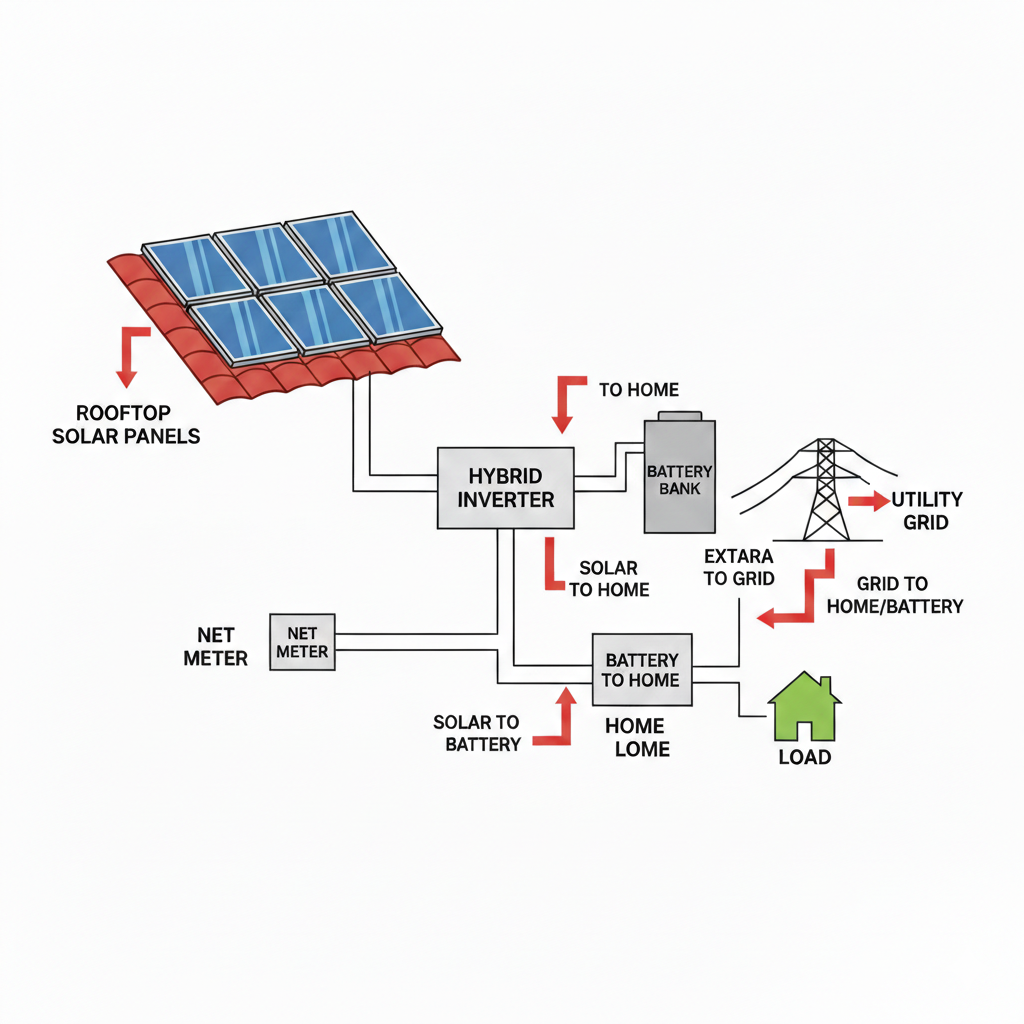
Overview of a Hybrid Solar System
A hybrid solar system combines the best features of on-grid and off-grid solar systems. Like any solar system, photovoltaic (PV) panels capture sunlight and convert it into electricity. What makes a hybrid system unique is that it is connected to the electricity grid and also includes battery storage.
This means a hybrid solar system allows you to:
Use solar power during the day
Store excess energy in batteries
Export extra electricity to the grid
Draw power from the grid when required
Hybrid solar systems are ideal for areas with frequent power cuts but still have a grid connection.
Hybrid Solar System Price in India (Indicative)
Hybrid solar systems are more expensive than on-grid systems due to the inclusion of batteries but are more flexible and reliable.
3 kW hybrid solar system price in India: *₹3,50,000 onwards
5 kW hybrid solar system price in India: *₹6,00,000 onwards
Elixir Solar provides end-to-end hybrid solar system solutions, including design, installation, and support.
Prices may vary depending on battery type, backup requirements, and site conditions.
What Is a Hybrid Solar System?
A hybrid solar system is a grid-connected solar setup with battery backup. It intelligently manages power from three sources:
Solar panels
Battery storage
Utility grid
The system ensures uninterrupted power supply while maximizing solar energy usage and reducing electricity bills.
When Should You Choose a Hybrid Solar System?
A hybrid solar system is recommended if:
You experience frequent power cuts
You want backup power without a diesel generator
You want to store excess solar energy
You wish to reduce dependency on the grid
You want long-term energy security
Hybrid systems are suitable for homes, commercial buildings, hospitals, offices, and industries.
Components of a Hybrid Solar System Explained
1. Solar Panels
Solar panels convert sunlight into DC electricity. Depending on requirements, systems may use:
Monocrystalline panels (high efficiency)
Polycrystalline panels (cost-effective)
Bifacial panels (higher generation)
Panels must be installed without shading for optimal performance.
2. Hybrid Solar Inverter
The hybrid inverter is the brain of the system. It:
Converts DC power to AC
Manages power flow between solar, battery, and grid
Automatically switches power sources during outages
Supports net metering (where applicable)
3. Batteries
Batteries store excess solar energy for later use:
Power backup during grid failure
Night-time electricity supply
Load management during peak hours
Battery options include lithium-ion and lead-acid, depending on budget and backup needs.
4. Charge Controller (Built-in / External)
Most hybrid inverters have a built-in charge controller with MPPT technology to:
Extract maximum power from panels
Regulate battery charging
Prevent overcharging and deep discharge
5. Mounting Structures
Mounting structures securely hold panels at an optimal tilt angle to maximize solar energy generation throughout the year.
6. Solar Accessories
For safety and performance, a hybrid system includes:
DC & AC cables
DC & AC combiner boxes
MC4 connectors
Earthing and lightning protection
Protection devices and isolators
How Does a Hybrid Solar System Work?
Step 1: Solar Power Generation
PV panels absorb sunlight and generate DC electricity. The power is sent to the hybrid inverter for intelligent distribution.
Step 2: Power Prioritization
The hybrid inverter prioritizes power usage in this order:
Solar power to run loads
Excess solar to charge batteries
Remaining excess exported to the grid
Step 3: Battery Charging & Storage
Excess solar energy is stored in batteries. The system uses MPPT technology to charge batteries efficiently and safely.
Step 4: Power Supply During Power Cuts
When the grid fails:
The inverter instantly switches to battery power
Essential appliances continue running without interruption
Step 5: Grid Support When Required
When solar and battery power are insufficient:
The system automatically draws electricity from the grid
Ensures uninterrupted power supply at all times
Step 6: AC Power Distribution
The inverter supplies high-quality AC power to the home or facility via a distribution board or ATS (Automatic Transfer Switch). Critical loads can be prioritized if required.